Sunday, March 31, 2019

An ETF that pays you to invest just hit the market

Low-cost exchange-traded funds have been gaining popularity in the ETF world, but one new product is taking that trend to the next level.

Rather than offering low or no fees, the Salt Low truBeta US Market ETF brands itself as a low-volatility fund that can do investors one better: it plans to actually pay them to put money in it.

Right now, the ETF charges investors 29 basis points per year to invest. But it has lofty goals, according to SEC filings: if approved, it'll charge zero fees for the first $100 invested, and then will pay investors 5 basis points for every $10,000 they put in.

Offered by analytics and investment company Salt Financial, the Low truBeta US Market ETF takes a risk-off approach to investing, Salt's website says. Its top holdings included Conagra Brands, CVS Health and Quest Diagnostics as of Friday.

And while ETF experts aren't all on board with the low-fee fad, few can deny the influence these funds have had in terms of raising interest and awareness.

"What's interesting is SALT has an existing ETF product. It trades under the ticker SLT," Todd Rosenbluth, head of ETF and mutual fund research at CFRA, told CNBC's "ETF Edge." "It has $14 million despite launching 10 months ago. J.P. Morgan [has] gathered billions and billions of dollars with their own products that are low-cost."

Tom Lydon, editor and proprietor of ETFTrends.com, called Salt's move "brilliant."

"Is it a marketing ploy? Maybe, but it's probably a great one because all the money is going into low-cost ETFs," he said in the same "ETF Edge" interview. "Getting through the gatekeeper is key."

"If ... they hit that $100 million mark very quickly because they're financing this, good for them, because now they're going to be available on platforms that you normally can't get available on — Morgan Stanley, Merrill Lynch — unless you have $100 million," Lydon said.

Lydon, who is also president of Global Trends Investments, added that he thought Salt's strategy for this fund was a genuinely good one, ploy or not.

"When you look under the hood, it's actually a great strategy. When you look at other low-volatility smart beta strategies, it really is good, and that will help get it attention," he said. "I think you're going to see more people try this, because if you can finance a launch that's going to get you to $100 million, you've got a better chance of getting to $1 billion. The biggest challenge is getting to that first $100 million."

Shares of the Low truBeta US Market ETF began trading on March 13 and are up roughly 1 percent since.

Disclaimer

Saturday, March 30, 2019

Why You Need to Change Your Facebook Password Now!

Your Facebook (NASDAQ:FB) password needs to be changed as soon as possible as the social media site has reportedly been storing the passwords of millions of users in plain text.

Facebook PasswordFacebook Password Source: Facebook

Brian Krebs of Krebs on Security revealed the news, noting that the business was storing these passwords on the company’s servers without any form of encryption or concealment. The announcement comes less than a month after CEO Mark Zuckerberg said the company planned on improving its privacy and security measures.

Facebook and other social media sites often use hashes and salts passwords to stop any cybercriminals from reading user passwords easily. However, the list of passwords discovered by Krebs were easy to read for anyone with the knowhow on how to access it.

He adds that these passwords were on a server, which was accessed millions of times by about 2,000 engineers and developers, endangering the security and privacy of Facebook’s users.

In response to this issue, Facebook VP of engineering, security and privacy Pedro Canahuati wrote in a post that the site will be informing “hundreds of millions of Facebook Lite users, tens of millions of other Facebook users, and tens of thousands of Instagram users” to inform them that their passwords were made available in the server that has them stored as plain text.

Perhaps surprisingly, the news only caused FB stock to decline about 0.5% on Friday.

Compare Brokers

Thursday, March 28, 2019

Best Clean Energy Stocks To Invest In Right Now

tags:CDNA,MORE ,ENPH,USG,CRY,MTW,

Natural gas for transportation supplier Clean Energy Fuels Corp (NASDAQ:CLNE) reported earnings on May 10, and while the company was profitable on both a GAAP and adjusted basis, growth -- measured in gallons of natural gas delivered -- slowed to almost a trickle, even when adjusted for last year's sale of the biomethane business. At the same time, the cyclical nature of its station construction and expansion business also affected the results, playing a role in a big decline in revenue. 

Yet even with these concerns, there were some positives on earnings day that investors should now factor into the thesis for the company, including a big announcement prior to earnings that multinational energy giant Total was taking a 25% stake in the company and would partner with it in an upcoming program to help accelerate adoption of heavy-duty natural gas trucks in the U.S. 

Clean Energy is counting on it being the dawn of heavy-duty natural gas vehicles. Image source: Clean Energy Fuels.

Best Clean Energy Stocks To Invest In Right Now: CareDx, Inc.(CDNA)

Advisors' Opinion:
  • [By Max Byerly]

    CareDx Inc (NASDAQ:CDNA) CFO Michael Brian Bell sold 16,355 shares of the business’s stock in a transaction dated Thursday, September 13th. The shares were sold at an average price of $25.06, for a total value of $409,856.30. Following the completion of the transaction, the chief financial officer now directly owns 52,238 shares of the company’s stock, valued at approximately $1,309,084.28. The transaction was disclosed in a legal filing with the Securities & Exchange Commission, which can be accessed through this link.

  • [By Shane Hupp]

    Get a free copy of the Zacks research report on CareDx (CDNA)

    For more information about research offerings from Zacks Investment Research, visit Zacks.com

  • [By Shane Hupp]

    Genomic Health (NASDAQ: GHDX) and CareDx (NASDAQ:CDNA) are both small-cap medical companies, but which is the superior stock? We will compare the two companies based on the strength of their dividends, analyst recommendations, risk, profitability, institutional ownership, valuation and earnings.

  • [By Shane Hupp]

    Shares of CareDx Inc (NASDAQ:CDNA) were up 6.3% during mid-day trading on Wednesday . The company traded as high as $27.48 and last traded at $27.34. Approximately 568,546 shares traded hands during trading, an increase of 8% from the average daily volume of 525,423 shares. The stock had previously closed at $25.73.

  • [By Money Morning Staff Reports]

    After looking at this week's penny stock gainers, we'll give you that leg up with one of our top-rated penny stocks from our proprietary stock ranking system…

    Penny Stock Current Share Price (March 26) Last Week's Gain Cartesian Inc. (OTCMKTS: CRTN) $0.39 170.69% Odyssey Marine Exploration Inc. (Nasdaq: OMEX) $8.76 135.90% iFresh Inc. (Nasdaq: IFMK) $8.25 64.64% China Auto Logistics Inc. (Nasdaq: CALI) $4.68 47.43% National American University Holdings Inc. (Nasdaq: NAUH) $1.20 39.29% Document Security Systems Inc. (NYSE: DSS) $1.58 33.91% Blonder Tongue Labs Inc. (NYSE: BDR) $0.77 33.90% CareDx Inc. (Nasdaq: CDNA) $7.49 29.88% Mediwound Ltd. (Nasdaq: MDWD) $5.10 26.51% New York & Co. Inc. (NYSE: NWY) $3.37 26.35%

    Don't Miss This Shot at a $78,000 Windfall: This tiny firm is about to make the entire world wire-free. As its game-changing technology revolutionizes the global power structure, its stock could hand investors a massive return. Learn more…

Best Clean Energy Stocks To Invest In Right Now: Monogram Residential Trust, Inc.(MORE )

Advisors' Opinion:
  • [By Max Byerly]

    Legends Room (CURRENCY:MORE) traded 3.4% higher against the US dollar during the one day period ending at 9:00 AM ET on September 24th. In the last seven days, Legends Room has traded up 22.9% against the US dollar. Legends Room has a total market capitalization of $851,168.00 and approximately $35,751.00 worth of Legends Room was traded on exchanges in the last 24 hours. One Legends Room token can currently be bought for approximately $0.43 or 0.00006334 BTC on exchanges.

  • [By Stephan Byrd]

    More Coin (CURRENCY:MORE) traded up 12.8% against the U.S. dollar during the twenty-four hour period ending at 15:00 PM E.T. on October 12th. Over the last week, More Coin has traded 3.3% lower against the U.S. dollar. One More Coin token can currently be bought for $0.17 or 0.00002798 BTC on popular cryptocurrency exchanges. More Coin has a market capitalization of $349,379.00 and approximately $41,007.00 worth of More Coin was traded on exchanges in the last 24 hours.

  • [By Ethan Ryder]

    Legends Room (CURRENCY:MORE) traded 3.4% higher against the dollar during the 24-hour period ending at 14:00 PM Eastern on September 30th. Legends Room has a market capitalization of $851,168.00 and approximately $35,751.00 worth of Legends Room was traded on exchanges in the last 24 hours. Over the last week, Legends Room has traded 22.9% higher against the dollar. One Legends Room token can currently be purchased for about $0.43 or 0.00006334 BTC on popular exchanges.

Best Clean Energy Stocks To Invest In Right Now: Enphase Energy, Inc.(ENPH)

Advisors' Opinion:
  • [By Anders Bylund, Daniel Miller, and Rich Duprey]

    Read on to see how much fuel our panelists believe that World Wrestling Entertainment (NYSE:WWE), Enphase Energy (NASDAQ:ENPH), and Five Below (NASDAQ:FIVE) have left in their tanks.

  • [By Stephan Byrd]

    Enphase Energy Inc (NASDAQ:ENPH) CEO Badrinarayanan Kothandaraman purchased 15,000 shares of Enphase Energy stock in a transaction dated Monday, August 20th. The stock was acquired at an average price of $4.88 per share, for a total transaction of $73,200.00. Following the completion of the acquisition, the chief executive officer now owns 95,677 shares of the company’s stock, valued at approximately $466,903.76. The acquisition was disclosed in a filing with the SEC, which can be accessed through the SEC website.

  • [By Travis Hoium]

    A year ago, Enphase Energy (NASDAQ:ENPH) was on the brink of collapse. The company was reporting unsustainable losses and revenue was falling as competition in the module-level electronics business picked up. 

  • [By Travis Hoium]

    Shares of microinverter manufacturer Enphase Energy Inc. (NASDAQ:ENPH) jumped as much as 13.4% in trading Tuesday after one of its customers got some positive tariff news. At 3:10 p.m. EDT, shares were trading 13% higher and seem poised to end the day up double digits. 

  • [By Travis Hoium]

    Solar stocks were on fire Thursday after Sunrun Inc (NASDAQ:RUN) reported earnings and California mandated solar on all new homes. Sunrun jumped as much as 19.7% while Vivint Solar Inc (NYSE:VSLR), Enphase Energy Inc (NASDAQ:ENPH), and SolarEdge Technologies Inc (NASDAQ:SEDG) were up 12.5%, 15.6%, and 16.3% respectively at their highs for the day. 

  • [By ]

    This direct current (DC) optimized inverter system maximizes power generation at the individual PV module level while lowering the cost of energy produced by the solar PV system. SolarEdge's patented inverter is not only best in class, but also contains an energy storage unit and/or charger, which differentiates it from its main competitor, Enphase energy (Nasdaq: ENPH).

Best Clean Energy Stocks To Invest In Right Now: USG Corporation(USG)

Advisors' Opinion:
  • [By Jason Hall, George Budwell, and Chuck Saletta]

    And while it may not always work out well to simply copy the moves other investors make, it can pay off to use their buying and selling moves as jumping-off points in your own research. We asked three real-world investors for their insight, and they wrote about two recent Buffett buys of Apple Inc. (NASDAQ:AAPL) and USG Corporation (NYSE:USG), and a recent Baker Brothers buy of Heron Therapeutics Inc (NASDAQ:HRTX). 

  • [By Max Byerly]

    Get a free copy of the Zacks research report on USG (USG)

    For more information about research offerings from Zacks Investment Research, visit Zacks.com

  • [By Ethan Ryder]

    ILLEGAL ACTIVITY WARNING: “USG (USG) Issues Quarterly Earnings Results” was originally posted by Ticker Report and is owned by of Ticker Report. If you are viewing this report on another publication, it was stolen and republished in violation of U.S. and international trademark & copyright laws. The correct version of this report can be read at https://www.tickerreport.com/banking-finance/4157507/usg-usg-issues-quarterly-earnings-results.html.

  • [By Jordan Wathen]

    As USG Corporation (NYSE:USG) drags its feet on an offer to sell the company for $42 per share, Berkshire intends to use its 30.8% ownership stake to motivate its top brass to make a deal. Berkshire told Bloomberg it intends to vote its shares against USG's board members who are up for re-election at this year's annual meeting, a clear message that Buffett is ready to cash in, even if USG's management and board are not.

Best Clean Energy Stocks To Invest In Right Now: CryoLife, Inc.(CRY)

Advisors' Opinion:
  • [By Logan Wallace]

    Cytosorbents (NYSE: CRY) and Cryolife (NYSE:CRY) are both small-cap medical companies, but which is the superior stock? We will contrast the two businesses based on the strength of their earnings, profitability, analyst recommendations, valuation, dividends, risk and institutional ownership.

  • [By Joseph Griffin]

    Amedica (NASDAQ:AMDA) and Cryolife (NYSE:CRY) are both small-cap medical companies, but which is the superior investment? We will contrast the two businesses based on the strength of their analyst recommendations, risk, valuation, dividends, earnings, profitability and institutional ownership.

  • [By Stephan Byrd]

    CryoLife (NYSE:CRY) issued an update on its FY18 earnings guidance on Wednesday morning. The company provided EPS guidance of $0.29-0.32 for the period, compared to the Thomson Reuters consensus EPS estimate of $0.31. The company issued revenue guidance of $250-256 million, compared to the consensus revenue estimate of $252.86 million.

  • [By Logan Wallace]

    Get a free copy of the Zacks research report on CryoLife (CRY)

    For more information about research offerings from Zacks Investment Research, visit Zacks.com

Best Clean Energy Stocks To Invest In Right Now: Manitowoc Company, Inc. (MTW)

Advisors' Opinion:
  • [By Rich Smith]

    Industrial stocks have been a casualty of Donald Trump's trade war, writes Barron's. In a recent column, the business journal noted that the Industrial Select Sector SPDR ETF, a proxy for industrial stocks as a whole, has lagged the performance of the broader S&P 500 in 2018. And yet, over the past month, both the S&P 500 and the Industrial SPDR have been trending upwards. One analyst thinks the time has come for three industrial stocks in particular -- Caterpillar (NYSE:CAT), Manitowoc (NYSE:MTW), and Helios Technologies (NASDAQ:SNHY) -- to rake in some gains.

  • [By Max Byerly]

    The Manitowoc Company (NYSE:MTW) – Equities researchers at SunTrust Banks cut their Q3 2018 earnings per share estimates for shares of The Manitowoc in a report issued on Wednesday, May 9th. SunTrust Banks analyst C. Brady now expects that the industrial products company will earn $0.08 per share for the quarter, down from their prior estimate of $0.18. SunTrust Banks has a “Hold” rating and a $26.00 price target on the stock. SunTrust Banks also issued estimates for The Manitowoc’s Q4 2018 earnings at $0.05 EPS, FY2018 earnings at $0.32 EPS and Q1 2019 earnings at ($0.09) EPS.

  • [By Neha Chamaria]

    First, cost inflation isn't a company-specific concern. Manitowoc (NYSE:MTW), for instance, pointed out last quarter how higher material, particularly steel, and labor costs are proving to be notable headwinds, compelling the company to bank on product price increases to tide over the challenges.

  • [By Joseph Griffin]

    Here are some of the news headlines that may have impacted Accern Sentiment Analysis’s rankings:

    Get Manitowoc alerts: Manitowoc (MTW) Lifted to Neutral at JPMorgan Chase & Co. (americanbankingnews.com) Benzinga’s Top Upgrades, Downgrades For June 21, 2018 (benzinga.com) An Eye on P/E Ratio of The Stock – Manitowoc Company Inc (NYSE: MTW) (stocksmarketcap.com) Review the Facts about stock: The Manitowoc Company, Inc. (MTW) (connectinginvestor.com) Manitowoc Company Inc.: New Manitowoc tower crane structure for Europe and Africa (twst.com)

    Shares of MTW stock traded up $1.01 during trading hours on Friday, reaching $27.18. The company had a trading volume of 944,608 shares, compared to its average volume of 611,803. The company has a debt-to-equity ratio of 0.39, a current ratio of 1.69 and a quick ratio of 0.72. The firm has a market capitalization of $929.53 million, a PE ratio of -104.54 and a beta of 1.54. Manitowoc has a 12-month low of $22.12 and a 12-month high of $44.03.

  • [By Lisa Levin]


    Companies Reporting After The Bell Hertz Global Holdings, Inc. (NYSE: HTZ) is projected to post quarterly loss at $1.31 per share on revenue of $1.97 billion. International Flavors & Fragrances Inc. (NYSE: IFF) is estimated to post quarterly earnings at $1.59 per share on revenue of $909.36 million. Zillow Group, Inc. (NASDAQ: ZG) is expected to post quarterly earnings at $0.06 per share on revenue of $294.79 million. General Cable Corporation (NYSE: BGC) is estimated to post quarterly earnings at $0.15 per share on revenue of $980.61 million. Central Garden & Pet Company (NASDAQ: CENT) is expected to post quarterly earnings at $0.84 per share on revenue of $598.45 million. Cabot Corporation (NYSE: CBT) is estimated to post quarterly earnings at $1 per share on revenue of $746.42 million. Fabrinet (NYSE: FN) is expected to post quarterly earnings at $0.71 per share on revenue of $319.71 million. National General Holdings Corp. (NASDAQ: NGHC) is projected to post quarterly earnings at $0.55 per share on revenue of $1.08 billion. The Navigators Group, Inc. (NASDAQ: NAVG) is estimated to post quarterly earnings at $0.75 per share on revenue of $320.92 million. Diplomat Pharmacy, Inc. (NYSE: DPLO) is expected to post quarterly earnings at $0.22 per share on revenue of $1.29 billion. Trex Company, Inc. (NYSE: TREX) is projected to post quarterly earnings at $1.19 per share on revenue of $172.22 million. AMC Entertainment Holdings, Inc. (NYSE: AMC) is expected to post quarterly earnings at $0.09 per share on revenue of $1.35 billion. Envision Healthcare Corporation (NYSE: EVHC) is projected to post quarterly earnings at $0.64 per share on revenue of $2.02 billion. Regal Beloit Corporation (NYSE: RBC) is estimated to post quarterly earnings at $1.23 per share on revenue of $869.64 million. Amedisys, Inc. (NASDAQ: AMED) is projected to post quarterly earnings at $0.67 per share on revenue of $39
  • [By Motley Fool Transcribers]

    Manitowoc Co Inc  (NYSE:MTW)Q4 2018 Earnings Conference CallFeb. 08, 2019, 10:00 a.m. ET

    Contents: Prepared Remarks Questions and Answers Call Participants Prepared Remarks:

    Operator

Tuesday, March 26, 2019

IRS giving more taxpayers a pass on underpayment penalties ... again

The IRS once again is making it easier on taxpayers facing unexpected penalties following implementation of the Tax Cuts and Jobs Act.

Individuals who failed to pay a certain percentage of their federal tax bill throughout the year are subject to an underpayment penalty when they file.

On Friday, the agency said it is lowering that threshold to 80 percent of what they owe, after previously reducing the figure to 85 percent in January. The move is expected to provide relief to an additional 15 percent of all taxpayers and applies only to tax year 2018.

Eligible payers who have already filed and paid the penalty can claim a refund by filling out IRS Form 843. That has to be done via old-fashioned snail mail only.

Before the tax code overhaul, anywhere from 10 million to 12 million taxpayers found themselves facing a penalty, said a senior Treasury official. In 2017, the total amount collected was $1.6 billion in penalties.

Normally, in order to avoid a penalty for underpayment, you have to pay at least 90 percent of what you owe for the tax year in question or 100 percent of the tax liability from the prior year (or 110 percent if your adjusted gross income on that year's return exceeded $150,000).

The IRS has been reminding taxpayers to review their W-4s, to ensure they are withholding sufficient taxes from their pay.

That's because the Treasury Department and the IRS updated their withholding tables in early 2018 to reflect the changes from the new tax law. The overhaul of the tax code slashed individual income tax rates, doubled the standard deduction and eliminated personal exemptions.

show chapters Here are your new income tax brackets for 2019 Here are your income tax changes for 2019    2:12 PM ET Thu, 14 March 2019 | 01:05

"We heard the concerns from taxpayers and others in the tax community, and we made this adjustment in an effort to be responsive to a unique scenario this year," said IRS Commissioner Chuck Rettig in a statement.

"The expanded penalty waiver will help many taxpayers who didn't have enough tax withheld. We continue to urge people to check their withholding again this year to make sure they are having the right amount of tax withheld for 2019," the commissioner said.

The withholding tables are guidelines your employer follows in order to deduct the appropriate amount of income taxes from your paycheck. You can also use your W-4 to tailor the taxes withheld from your pay.

If not enough is withheld, you'll owe money come tax time. Pay too much, and you end up with a large refund.

(Senior Personal Finance Correspondent Sharon Epperson and personal finance writer Darla Mercado contributed to this story.)

More from Personal Finance:
Say good-bye to these tax deductions
More ways to save on your 2018 taxes

Subscribe to CNBC on YouTube.

Saturday, March 23, 2019

Uniti Group Inc. (UNIT) Q4 2018 Earnings Conference Call Transcript

Logo of jester cap with thought bubble.

Image source: The Motley Fool.

Uniti Group Inc.  (NASDAQ:UNIT)Q4 2018 Earnings Conference CallMarch 20, 2019, 4:15 p.m. ET

Contents: Prepared Remarks Questions and Answers Call Participants Prepared Remarks:

Operator

Welcome to Uniti Group's Fourth Quarter 2018 Conference Call. My name is Jamie and I will be your operator for today. A webcast of this call will be available on the Company's website www.uniti.com, beginning March 20, 2019 and will remain available for 14 days. At this time, all participants are in a listen-only mode. Participants on the call, will have the opportunity to ask questions following the Company's prepared remarks.

The Company would like to remind you that today's remarks include forward-looking statements and actual results can differ materially from those projected in these statements. The factors that could cause actual results to differ are discussed in the Company's filings with the SEC. The Company's remarks this afternoon will reference slides posted on its website and you are encouraged to refer to those materials during this call.

Discussions during the call will also include certain financial measures that are not prepared in accordance with the Generally Accepted Accounting Principles. Reconciliation of these non-GAAP financial measures to most directly comparable GAAP financial measures can be found on the Company's current report on Form 8-K, dated today.

I would now like to turn the call over to Uniti Group's Chief Executive Officer, Kenny Gunderman. Please go ahead, Mr. Gunderman.

Kenneth A. Gunderman -- President, Director and Chief Executive Officer

Thank you. Good afternoon everyone and thank you for joining. Before I review our operational performance for the quarter, I'd like to reflect on current industry trends and Company milestones we achieved in 2018. Just like last year, demand for fiber infrastructure continued to be one of the top telecom themes in 2018 and going into 2019. Preparation for a broader rollout of 5G wireless and fixed wireless services, our wireless carrier customers are looking to densify their networks with both additional macro towers, as well as small cell nodes.

As bandwidth consumption increases and new technologies continue to evolve and develop, the need for low latency dense fiber will continue to increase. This densification will require a tremendous amount of fiber. And we believe the both Uniti Fiber and Uniti Leasing are uniquely positioned to capture this demand with over 5 million strand miles available owned fiber.

At Uniti Fiber, we completed three dark fiber projects in 2018 and are currently in the process of completing the build out of several more dark fibers, small cell projects primarily in the Southeast by the end of this year. In fact, we deployed our 1,000 small cell during the fourth quarter. We currently have approximately 1,700 small cells on backlog and expect to deploy over -- over 1,350 in 2019. As we complete these projects, we will focus on leasing them up, not only with additional wireless opportunities but enterprise, E-Rate and government opportunities all of which have attractive economics and incremental yields.

We continue to see positive momentum in our tower business. In the US, we continue to expect to build between 200 and 300 towers on average annually over the next five years. With the backdrop of 5G densification, national wireless carriers continue to look for vendor diversity on new tower builds. Recently, AT&T announced that Uniti Towers is a strategic tower provider for them and we look forward to fostering and expanding this relationship with AT&T for years to come. AT&T also acknowledged Uniti as a bundled infrastructure provider, including small cells, fiber and towers. We believe this comprehensive product suite distinguishes Uniti in the marketplace, principally with the wireless carriers and Web-centric and National MSOs contemplating wireless strategies. At Uniti Leasing we announced four transactions in 2018, entering into sale leasebacks with TPx and CableSouth, acquiring fiber assets from CenturyLink, and entering into a dark fiber lease with the National MSO. We've been successful so far and leasing up these assets and expect similar opportunities to be abundant in 2019.

We also recently announced our first strategic OpCo-PropCo transaction with Macquarie Infrastructure Partners in acquiring the fiber assets of the Bluebird network. We believe this deal structure can be replicated with other operating partners and provides the framework for future similar -- similarly structured transactions. Together these announced transactions represented incremental $45 million of annual revenue with 90% plus EBITDA margins and little to no additional CapEx required. By offering a full suite of services across Uniti Fiber, Uniti Towers and Uniti Leasing, we have the potential to further unlock significant value for our Company.

We currently have consolidated revenue remaining under contract of nearly $10 billion and if you exclude revenue relating to the Windstream Lease, our total revenue under contract grew over 45% from the prior year. It's important to note that over 90% of our revenue remaining under contract relates to leasing, towers, dark fiber and small cells which have little to no churn associated with them and provide highly visible steady cash flows over the next several quarters.

Let me now provide an update on our operational results. Uniti Fiber sales bookings in the fourth quarter were approximately $0.5 million of MRR, consistent with the prior quarter. 40% of our sales bookings in the fourth quarter came from local enterprises, government and K-12 schools. 37% from the four national wireless carriers and 23% from wholesale. We continue to see strong, wireless momentum as the rollout of 5G services continues to ramp. RFP activity for both small cells and backhaul from wireless carriers remains healthy in our markets, and we continue to see increased demand from non-wireless customers as well. For example, in the fourth quarter, we were awarded a 20-year contract from a national wireless carrier to build dark fiber to over 160 backhaul sites located primarily in the Southeast, which represents approximately $1 million of annual recurring revenue with an initial yield of approximately 15%. We also signed the contract during the quarter for approximately 80 small cell nodes that are being deployed for enhanced coverage including for first responders in the Florida Panhandle. Combined both of these deals add over $23 million of total contractual revenue to our backlog.

Our E-Rate season is off to a good start, as we expect to retain most of our existing business and we've already won a handful of new deals as well. In fact, we were verbally awarded a 10-year contract with a large metropolitan school district in Florida that will add over 118,000 of MRR representing total contract value of $14 million. We are already seeing benefits from our ITS acquisition as we have won a handful of deals that are ITS and Uniti sales teams partnered on. We are actively pursuing several deals including some larger scale ones and we'll have a more comprehensive update on our E-Rate season during our next earnings call.

Uniti Fiber installed $0.6 million of MRR during the fourth quarter 2018 with 18% related to bandwidth upgrades and 30% relating to dark fiber, backhaul and small cell projects. Installs were negatively impacted in the quarter by recovery efforts related to Hurricane Michael. Excluding the impact of the Hurricane, installs would have been $0.9 million in the fourth quarter of '18, an increase of $0.2 million from the prior quarter, and consistent with last year's fourth quarter activity level. As we entered 2019, we continue to see solid improvement in dark fiber and small cell site performance as they work closely with our customers and municipalities to complete these builds. We still expect the vast majority of our existing dark fiber and small cell construction projects will be completed by the end of 2019.

Total churn for the quarter excluding intercompany churn related to the ITS transaction was $0.5 million resulting in a monthly churn rate of 0.8% in line with the prior year's fourth quarter. For full year 2018, our monthly churn was 1%. We continue to make steady progress in Uniti Fiber as we've worked through most of the headwinds we outlined in prior quarters. We will remain committed to our strategy of focusing on Tier 2 and Tier 3 markets with both attractive economics and competitive dynamics.

Turning to towers, we completed 78 new towers in the US during the quarter. We also added three towers in Mexico and our total tower count in the US and Latin America combined now stands at 928 towers. In the US, we expect to complete construction of approximately 200 towers in 2019. Lease up activity on our tower portfolio in the US continues to ramp. Excluding towers acquired from Windstream and Non, our current tenancy ratio in the US is at 1.1 times. We look to continue to engage our wireless customers after furthering our existing relationships as they continue to look to diversify their existing vendor relationships.

In Uniti Leasing, we continue to see strong interest and additional opportunities, including additional lease up, new sale leasebacks and OpCo-PropCo structures. We remain actively engaged and leasing additional routes with customers across our entire footprint including the largest content providers, MSOs and wireless carriers in the industry. In fact we signed an MLA with national wireless customer in the fourth quarter on a 20-year term to lease long-haul fiber representing a total contract value of over $5 million. Based on our conversations with customers, we're

Saturday, March 16, 2019

Famed Investor Named In Elite College Scandal, Raising Critical Ethics Questions for All

&l;p&g;&l;img class=&q;size-full wp-image-268&q; src=&q;http://blogs-images.forbes.com/morgansimon/files/2019/03/3805687772_6945f3379c_b.jpg?width=960&q; alt=&q;&q; data-height=&q;679&q; data-width=&q;1024&q;&g; At least 50 parents have so far been charged in a massive college admission bribery scandal.

&l;span style=&q;font-weight: 400;&q;&g;Yesterday, William E. &a;ldquo;Bill&a;rdquo; McGlashan Jr., Founder and Managing Partner of the $13B TPG Growth fund, was indicted in the &l;/span&g;&l;a href=&q;https://www.nytimes.com/2019/03/12/us/college-admissions-cheating-scandal.html&q; target=&q;_blank&q;&g;&l;span style=&q;font-weight: 400;&q;&g;elite college scandal&l;/span&g;&l;/a&g;&l;span style=&q;font-weight: 400;&q;&g;. He was particularly noted for his candor in recorded phone calls about his efforts to buy a slot at USC for his child for $250,000. The tactic, employed by ringleader William Singer, was to&l;/span&g;&l;a href=&q;https://www.thisisinsider.com/college-admissions-scandal-bill-mcglashan-son-usc-2019-3&q; target=&q;_blank&q;&g; &l;span style=&q;font-weight: 400;&q;&g;photoshop McGlashan&a;rsquo;s son &l;/span&g;&l;/a&g;&l;span style=&q;font-weight: 400;&q;&g;to look like a recruitment-worthy football kicker &a;mdash; despite the fact that his son&a;rsquo;s high school did not have a football team.&l;/span&g;

&l;span style=&q;font-weight: 400;&q;&g;McGlashan has recently gained notoriety as a proponent of impact investing. The Rise Fund, an initiative he co-founded under the TPG umbrella, has raised &l;/span&g;&l;a href=&q;https://www.bloomberg.com/news/articles/2017-10-03/tpg-seals-record-2-billion-for-rise-impact-fund-co-led-by-bono&q; target=&q;_blank&q;&g;&l;span style=&q;font-weight: 400;&q;&g;over $2B&l;/span&g;&l;/a&g;&l;span style=&q;font-weight: 400;&q;&g; for interventions seeking to address global poverty and climate change. &l;/span&g;

&l;span style=&q;font-weight: 400;&q;&g;The fact that McGlashan was a proponent of ethical investment has raised several deep questions for the sector, and for the general public. &l;/span&g;&l;span style=&q;font-weight: 400;&q;&g;Does exercising your unchecked privilege in the world make you less ethical - separate from whether or not your actions are illegal? Should promoters of ethical investments be held to a higher standard when it comes to their personal ethics? &l;/span&g;&l;span style=&q;font-weight: 400;&q;&g;Do you need to have impeccable ethics to be a good impact investor?&l;/span&g;

&l;span style=&q;font-weight: 400;&q;&g;Having spent 18 years in the impact investing sector, and interacted with all types of investors, I would actually argue that impact investors should not be held to any higher standards. Investors are, and should be, held to basic ethical standards, period. &l;/span&g;&l;span style=&q;font-weight: 400;&q;&g;But these &a;ldquo;basic ethical standards&a;rdquo; must be considered far beyond simple legal standards.&l;/span&g;

&l;span style=&q;font-weight: 400;&q;&g;It&a;rsquo;s too easy for us to read this story and say, &a;ldquo;I would never do something that outrageous, or that illegal&a;rdquo; and write off the lessons for impact investment generally, or simply write off The Rise Fund and the many skilled, ethical professionals who also played critical roles in its formation. The opportunity here is for all of us in the field to think more critically about how we hold and share power. &l;/span&g;

&l;span style=&q;font-weight: 400;&q;&g;Ethics is also about acknowledging the ways that those of us with privilege &a;mdash; whether it be due to social class, race, gender identity, sexual orientation, or the intersections between &a;mdash; can be complicit in exploiting others through fully legal means. As this&l;/span&g;&l;a href=&q;https://www.nytimes.com/2019/03/12/opinion/editorials/college-bribery-scandal-admissions.html?smid=nytcore-ios-share&q; target=&q;_blank&q;&g; &l;span style=&q;font-weight: 400;&q;&g;New York Times editorial&l;/span&g;&l;/a&g;&l;span style=&q;font-weight: 400;&q;&g; thoughtfully pointed out, wealthy individuals have always legally worked the system when it comes to accessing elite education &a;mdash; Charles Kushner&l;/span&g;&l;a href=&q;https://www.msn.com/en-us/news/politics/college-admissions-scam-rekindles-scrutiny-of-kushners-harvard-acceptance-dollar25m-pledge/ar-BBUHtgT?li=BBnb7Kz&q; target=&q;_blank&q;&g;&l;span style=&q;font-weight: 400;&q;&g; happening to make a $2.5M pledge to Harvard&l;/span&g;&l;/a&g;&l;span style=&q;font-weight: 400;&q;&g; at the time of his son, Trump&a;rsquo;s son-in-law Jared Kushner&a;rsquo;s admission comes to mind. This recent case is simply a more extreme version of what we&a;rsquo;ve always known to be true, and what we &a;mdash; the generally economically privileged class of impact investors &a;mdash; tend to replicate when we make investment decisions with unchecked privilege.&l;/span&g;

&l;span style=&q;font-weight: 400;&q;&g;As I wrote in Real Impact, &a;ldquo;Replicating past mistakes is all too easy, because the conventional financial system automatically gives us the power &a;mdash; even encourages us &a;mdash; to make exactly the wrong decisions.&a;rdquo; It&a;rsquo;s perfectly acceptable, and definitely legal, to many impact investors to celebrate job creation at $7.25/hr while the owners of an enterprise make $50 off that labor &a;mdash; because that wage is &a;ldquo;good enough for those people.&a;rdquo; Is that ethical? It&a;rsquo;s considered reasonable to charge a woman 300% interest on a microloan, because her next best alternative was 1,000% from the local moneylender&a;hellip; and then&l;/span&g;&l;a href=&q;https://hbr.org/2018/06/can-impact-investing-avoid-the-failures-of-microfinance&q; target=&q;_blank&q;&g; &l;span style=&q;font-weight: 400;&q;&g;make ~250x on the IPO of the microloan provider&l;/span&g;&l;/a&g;&l;span style=&q;font-weight: 400;&q;&g;. Is that ethical? In general, unbalanced relationships to capital and privilege often lead impact investors to take advantage of people in vulnerable situations, desperate for alternatives &a;ndash; in ways that are completely legal. They may even be thanked for doing so.&l;/span&g;

&l;span style=&q;font-weight: 400;&q;&g;Conversely, doing the thing that&a;rsquo;s legal is not always synonymous with doing what&a;rsquo;s most ethical. Investing is a regulated industry, such that all advisors and managers are required to follow the law both in their personal and professional lives. If anything, the concern I have with the regulation of impact investment managers, and policing of our law-abidingness, is that it actually &l;/span&g;&l;i&g;&l;span style=&q;font-weight: 400;&q;&g;limits&l;/span&g;&l;/i&g;&l;span style=&q;font-weight: 400;&q;&g; our activism and ability to engage in civil disobedience &a;mdash; as Martin Luther King said in&l;/span&g;&l;a href=&q;http://www.africa.upenn.edu/Articles_Gen/Letter_Birmingham.html&q; target=&q;_blank&q;&g; &l;span style=&q;font-weight: 400;&q;&g;Letters from a Birmingham Jail&l;/span&g;&l;/a&g;&l;span style=&q;font-weight: 400;&q;&g;, &a;ldquo;&l;/span&g;&l;span style=&q;font-weight: 400;&q;&g;one has a moral responsibility to disobey unjust laws.&a;rdquo; &l;/span&g;

&l;span style=&q;font-weight: 400;&q;&g;At times a little more ethics and a little less unjust law-abiding could actually be the better posture for impact investors to take. Civil disobedience can be critical as we seek to both support frontline communities who literally put their bodies on the line in public protests, and also push the boundaries of society when it comes to how we treat people and the planet.&l;/span&g;

&l;span style=&q;font-weight: 400;&q;&g;I would posit we ALL could be more ethical, and most critically, more effective impact investors by examining our individual relationships to privilege. What are your sources of privilege? How do they impact the relationships with those whom you hope to benefit? What are benefits you might be given by financial systems that you may want to renounce, in order to strengthen your social impact? What are ways you can check your privilege, particularly when it comes to crafting investments that add value rather than extracting it from communities?&l;/span&g;

&l;a href=&q;https://impactalpha.com/the-rise-funds-impact-multiple-of-money/&q; target=&q;_blank&q;&g;&l;span style=&q;font-weight: 400;&q;&g;McGlashen himself once noted,&l;/span&g;&l;/a&g;&a;nbsp;&q;&l;span style=&q;font-weight: 400;&q;&g;Capitalism isn&a;rsquo;t immoral as much as amoral. It needs to be managed and directed in a way so we can all know what we&a;rsquo;re getting into when we build businesses and invest capital.&a;rdquo; I agree with him 100% &l;/span&g;&l;span style=&q;font-weight: 400;&q;&g;on that point, and would challenge him &a;mdash; and all of us &a;mdash; &l;/span&g;&l;span style=&q;font-weight: 400;&q;&g;to significantly raise the bar when it comes to ethics.&l;/span&g;&l;/p&g;

Thursday, March 14, 2019

Boston Scientific Co. (BSX) SVP Wendy Carruthers Sells 29,412 Shares

Boston Scientific Co. (NYSE:BSX) SVP Wendy Carruthers sold 29,412 shares of the firm’s stock in a transaction that occurred on Monday, March 11th. The stock was sold at an average price of $39.63, for a total transaction of $1,165,597.56. Following the sale, the senior vice president now directly owns 200,751 shares in the company, valued at approximately $7,955,762.13. The transaction was disclosed in a document filed with the Securities & Exchange Commission, which is available at this link.

NYSE:BSX opened at $40.26 on Wednesday. Boston Scientific Co. has a 1-year low of $26.27 and a 1-year high of $41.00. The company has a debt-to-equity ratio of 0.55, a quick ratio of 0.56 and a current ratio of 0.76. The firm has a market capitalization of $54.76 billion, a P/E ratio of 27.39, a PEG ratio of 2.30 and a beta of 0.83.

Get Boston Scientific alerts:

Boston Scientific (NYSE:BSX) last posted its quarterly earnings data on Wednesday, February 6th. The medical equipment provider reported $0.39 earnings per share for the quarter, beating analysts’ consensus estimates of $0.37 by $0.02. The firm had revenue of $2.56 billion for the quarter, compared to analyst estimates of $2.57 billion. Boston Scientific had a net margin of 17.01% and a return on equity of 25.92%. Boston Scientific’s quarterly revenue was up 6.4% on a year-over-year basis. During the same period last year, the firm posted $0.34 EPS. Analysts forecast that Boston Scientific Co. will post 1.56 earnings per share for the current fiscal year.

A number of analysts have weighed in on the stock. Argus raised their price objective on shares of Boston Scientific from $43.00 to $45.00 and gave the stock a “buy” rating in a report on Wednesday, February 13th. Canaccord Genuity reaffirmed a “buy” rating and issued a $45.00 target price on shares of Boston Scientific in a report on Monday, February 11th. SunTrust Banks reaffirmed a “buy” rating and issued a $47.00 target price on shares of Boston Scientific in a report on Friday, February 8th. Guggenheim reaffirmed a “buy” rating and issued a $48.00 target price on shares of Boston Scientific in a report on Friday, February 8th. Finally, Needham & Company LLC reaffirmed a “buy” rating and issued a $43.00 target price on shares of Boston Scientific in a report on Wednesday, February 6th. Three investment analysts have rated the stock with a hold rating, twenty-two have assigned a buy rating and two have assigned a strong buy rating to the stock. The stock presently has a consensus rating of “Buy” and an average target price of $40.54.

Several hedge funds and other institutional investors have recently modified their holdings of the business. American Century Companies Inc. boosted its position in shares of Boston Scientific by 0.8% during the 4th quarter. American Century Companies Inc. now owns 4,136,750 shares of the medical equipment provider’s stock worth $146,193,000 after purchasing an additional 34,818 shares in the last quarter. Norges Bank purchased a new stake in shares of Boston Scientific during the 4th quarter worth $468,943,000. Actinver Wealth Management Inc. purchased a new stake in shares of Boston Scientific during the 4th quarter worth $250,000. Kentucky Retirement Systems Insurance Trust Fund purchased a new stake in shares of Boston Scientific during the 4th quarter worth $967,000. Finally, B.S. Pension Fund Trustee Ltd acting for the British Steel Pension Fund purchased a new stake in shares of Boston Scientific during the 4th quarter worth $598,000. Institutional investors own 91.34% of the company’s stock.

COPYRIGHT VIOLATION WARNING: “Boston Scientific Co. (BSX) SVP Wendy Carruthers Sells 29,412 Shares” was published by Ticker Report and is the sole property of of Ticker Report. If you are viewing this story on another domain, it was copied illegally and republished in violation of United States and international copyright laws. The legal version of this story can be viewed at https://www.tickerreport.com/banking-finance/4217530/boston-scientific-co-bsx-svp-wendy-carruthers-sells-29412-shares.html.

About Boston Scientific

Boston Scientific Corporation develops, manufactures, and markets medical devices for use in various interventional medical specialties worldwide. It operates through three segments: MedSurg, Rhythm and Neuro, and Cardiovascular. The company offers interventional cardiology products, including drug-eluting coronary stent systems used in the treatment of coronary artery disease; percutaneous coronary interventions therapy products to treat atherosclerosis; intravascular catheter-directed ultrasound imaging catheters, fractional flow reserve devices, and systems for use in coronary arteries and heart chambers, as well as certain peripheral vessels; and structural heart therapy systems.

Featured Article: Gap Up Stocks

Insider Buying and Selling by Quarter for Boston Scientific (NYSE:BSX)

Tuesday, March 12, 2019

Luxfer Holdings PLC (LXFR) Q4 2018 Earnings Conference Call Transcript

Logo of jester cap with thought bubble.

Image source: The Motley Fool.

Luxfer Holdings PLC (NYSE:LXFR)Q4 2018 Earnings Conference CallMarch 12, 2019, 8:30 a.m. ET

Contents: Prepared Remarks Questions and Answers Call Participants Prepared Remarks:

Operator

Good morning. My name is Laurie and I'll be your conference operator today. Welcome to Luxfer's 2018 Fourth Quarter Earnings Conference Call. All lines have been placed on mute. After the speakers' remarks, there will be a question-and-answer session.

Now I'll turn the conference over to Doug Fox, Luxfer's Director of Investor Relations. Doug, please go ahead.

Douglas A. Fox -- Director of Investor Relations

Thank you, Laurie, and welcome. With me today are Alok Maskara, our CEO and Heather Harding, Luxfer's CFO. First, Alok will provide a brief overview of the fourth quarter and full year. Alok's remarks will be followed by Heather's review of the fourth quarter's financial performance, Alok will then return for some closing comments. Today's webcast is accompanied by a slide presentation, which can be found on Luxfer's website. We will refer to these slides throughout our prepared remarks. Any references to non-GAAP financials are reconciled in the appendix of the presentation.

Before we begin, please let me remind you that any forward-looking statements made about the Company's expected financial results are subject to future risks and uncertainties. Please refer to Slide 2 of today's presentation for further details. After our prepared remarks, we have reserved time for questions-and-answers.

Now, let me turn the call over to Alok. Alok, please go ahead.

Alok Maskara -- Chief Executive Officer

Thanks, Doug. Good morning, everyone. Thank you for joining us today. Please turn to Slide 3 for the summary of our performance for the fourth quarter of 2018. For the fourth quarter of 2018, Luxfer reported adjusted diluted earnings per share of $0.40, a 67% increase year-over-year and adjusted EBITDA of $16 million, up 16% year-over-year.

We achieved this strong profit growth despite a 4% decline in quarterly sales. For the year, net cash flows before financing increased to $22.6 million, up from $7.1 million in the prior year. We finished the year with a net debt of $63.3 million, which is a $38 million year-over-year reduction in net debt and a modest 0.8 times net debt-to-EBITDA leverage ratio.

On an annualized basis, we delivered 18.4% in return on invested capital, based on adjusted earnings. In addition to the strong financial performance, we made significant progress toward our transformation plan. For 2018, we achieved $9.2 million in cost reductions that includes benefits from manufacturing productivity, footprint consolidation and streamlining our back office operations.

With this strong start, we are increasing our 2021 cost reduction target to $24 million, up from our prior $20 million commitment. And with the filing of our first 10-K as an SEC domestic issuer, we have completed the simplification phase of our transformation plan.

Now, please turn to Slide 4 for details around the financials. For the fourth quarter, sales of $110.9 million were down 4% from a year ago. This decline was primarily the result of an anticipated reduction in hurricane-related disaster-relief sales. Even with the quarterly decline in sales, revenue for the 2018 fiscal year were up 11% to $488 million, which is well above our long-term projected growth rate of GDP plus.

We had a solid year all around, with both business segments contributing to the growth. We benefited from strong customer acceptance of our innovative new products and our focus on commercial excellence. Our exceptional growth in 2018 sets a new foundation for future growth to be sustained through our innovation and commercial excellence initiatives.

Our focus on driving higher productivity through lean operations and streamlining back office activities has delivered a 16% increase in adjusted EBITDA for the fourth quarter. For the full year, EBITDA increased $34 million to $80 million. Adjusted earnings per share under GAAP accounting was $0.40 for the quarter and $1.69 for the year. Supplemental financial information on the IFRS to GAAP conversion is available on our website.

Now, please turn to Slide 5. With the filing of our Form 10-K yesterday, we have now completed the simplification phase of our transformation plan. We began this initiative in December 2017, when we converted our listing of ADR's to ordinary shares on the New York Stock Exchange. Now, as an SEC domestic issuer, we are following US GAAP accounting standards and will be issuing 10-Qs, proxies and other documents such as SEC forms 3, 4 and 5. We believe that shareholders will welcome the increased transparency and governance standards associated with being an SEC domestic issuer.

We are also on track with the second and third phases of our transformation plan. Our cultural transformation is gaining momentum with leadership training on Luxfer values of accountability and customer first. Recently, we strengthened our leadership rank with the addition of Jeff Moorefield as our Global Vice President of Operations.

In his new rule, Jeff will be responsible for driving Luxfer's Business Excellence Standard Toolkit or Luxfer B.E.S.T. We will work with our business units to drive lean manufacturing, strengthen the supply chain, and accelerate productivity. We are very excited to welcome Jeff to our leadership team and believe that his years of operational leadership experience will be a great asset to Luxfer; welcome, Jeff.

Our focus on growth recovery is also generating positive, sustainable results. We are embracing commercial excellence, which is supported by a growth scorecard that is driving favorable customer oriented behaviors. In addition, we are seeing early positive results from a disciplined stage-gate process implemented late last year to manage our innovation process.

Now, please turn to Slide 6. In addition to strengthening the management team, yesterday we announced changes to Luxfer's Board as part of our ongoing succession planning process. These Board changes will enhance corporate governance and increase our focus on talent management. Effective May 15th, David Landless will become the new Chair of Luxfer's Board in conjunction with the previously announced retirement of Joe Bonn.

David has been a member of Luxfer's Board since 2013 and is currently the Chair of the Audit Committee. He also serves on the nominations and governance committee. David's history with Luxfer combines with his extensive financial experience in manufacturing companies makes him well suited to lead Luxfer's Board.

We are also pleased to announce the addition of Allisha Elliott. Allisha is the Chief Human Resources Officer of Sensata, a publicly traded company that is the leading supplier of sensing solutions. She brings great experience in the development of human capital from her tenure at some of the world's largest companies, including Honeywell, Amazon and Pepsi. We welcome her insights on developing a high performance, customer focused culture at Luxfer.

Allisha follows the addition of Dick Hipple, who joined the Luxfer Board in November 2018. Dick is the former Chair and CEO of Materion, a global advanced materials company like Luxfer. He's also a Director of the Barnes Group and KeyCorp Bank. As an experienced global leader of a performance materials company, Dick adds substantial knowledge and experience to our Board.

Joe Bonn has been a member of Luxfer's Board since 2007 and the Board chair since 2016. He has been instrumental in driving the current transformation at Luxor, including refreshing the Board and the management team. Personally, I will miss Joe's mentoring and guidance and I want to thank him for orchestrating an orderly and seamless transition. Thank you Joe, for your years of service on the Luxfer Board and wish you well for your well-deserved retirement.

Now, please turn to Slide 7. We continue to make significant progress in our transformation plan. We are now positioned to achieve greater cost savings by 2021 and have increased our target to $24 million. Based on a strong 2018 performance, we expect to deliver an additional $15 million in cost savings over the next three years.

As part of our transformation plan, in 2018, we made great strides in consolidating our facility footprint. In Q4, we completed two manufacturing consolidations, Riverhead, New York into Cincinnati, Ohio and Findlay, Ohio, into Madison, Illinois. In addition, during the fourth quarter, we announced our decision to divest our magnesium recycling operations in the Czech Republic.

In December, we also announced a project to consolidate our French cylinder operations into our UK and California locations. We are currently in discussions with the representatives of the local works council on this project.

Now, please turn to Slide 8, and let me turn the call over to Heather for a review of our financial performance. Heather, go ahead.

Heather Harding -- Chief Financial Officer

Thanks Alok, and good morning, everyone. Fourth quarter sales were down 4% to $110.9 million, primarily the result of lower volumes, much of it related to reduced hurricane-related sales of disaster-relief products, which accounted for approximately $3 million of the year-over-year decline.

The remainder related to a $2.3 million impact from FX, as well as lower shipments of Graphic Arts products due to timing. Higher sales in our cylinder segment and favorable pricing partially offset these volume declines. Despite the sales decline, adjusted EBITDA increased 16% to $16 million for the quarter, our concerted efforts around price and cost reductions more than offset inflation and lower volume.

Now please turn to Slide 9 for a summary of our full year results. For 2018, the 11% growth in sales was largely due to higher volumes, which contributed $35 million or 76% of the total increase. The remaining growth came from favorable pricing and movements in foreign exchange.

For the full year, sales grew in both segments. Gas Cylinders increased 8% on notable growths in alternative fuel cylinders and Superform products. Elektron advanced 13% on the strength of magnesium alloys, driven in large part by SoluMag and growth in zirconium chemicals. The growth in sales contributed to the 34% increase in adjusted EBITDA of $80 million.

Volume, cost reductions, price and FX were all favorable and more than offset inflation for the year. Volume added approximately $11 million to the total $17.7 million growth in profits with cost reductions accounting for $9.2 million of the increase.

Now please turn to Slide 10 for a breakout of our Elektron segment performance. Fourth quarter's segment sales declined 11%, primarily on lower volume, lower shipments of hurricane-related disaster-relief products, as expected, and Graphic Arts products were partially offset by strong growth in magnesium alloys and zirconium chemicals.

Foreign exchange reduced sales by $1 million and we achieved favorable pricing of approximately $700,000 for the quarter. Quarterly adjusted EBITDA declined 12%, primarily due to the lower shipments. Favorable price and cost reduction efforts partially offset the volume decline.

Looking to the Gas Cylinders results on Slide 11; sales for Gas Cylinder segment increased 3% on strong growth in alternative fuel cylinders, primarily in Europe. In addition, the turnaround in Superform continues with growth in both sales and profitability. Quarterly adjusted EBITDA for the Gas Cylinder segment increased a robust 144%, including $3.1 million in cost savings; favorable price and volume benefits totaling $900,000 more than offset inflation.

Please turn to Slide 12 for balance sheet and cash flow metrics. We finished the year in a strong financial condition. Net debt totaled $63.3 million, down $38 million from the end of 2017, and our net debt-to-adjusted EBITDA leverage ratio was a modest 0.8 times. We reduced our operating working capital by $11 million even with the 11% full year sales increase and remained under 20% of the sales for the year.

For the quarter, net cash flow before financing increased to $23 million, up from $7 million in the fourth quarter of '17. Looking at the full year, net cash flow before financing was $53 million, delivering 114% cash conversion on adjusted net income. On an annualized basis, our return on invested capital on adjusted earnings was greater than 18%. So in summary, we had an exceptionally strong financial year, including both earnings and cash performance.

Now I'll turn the call back over to Alok for a wrap up.

Alok Maskara -- Chief Executive Officer

Thanks, Heather. Please turn to Slide 13. 2018 was a transformative year for Luxfer. We achieved strong growth in sales and profits, sharply improved cash conversion and materially strengthened the balance sheet. We made it easier for investors to buy Luxfer's stock and created a more transparent Company with the conversion to SEC domestic issuer status. Equally important, we positioned the Company for sustain long-term GDP plus growth.

We are increasingly optimistic about the future of the Company, as momentum in productivity is continuing and we are gaining share in our core markets by delivering more customer-focused innovation.

Please turn to Slide 14 for the 2019 outlook. We are starting 2019 in a good position. Macro trends and business activity remain favorable. Our strategy of developing a high performance culture is delivering results. We are also optimistic that innovation will continue and contribute to our performance in 2019 and beyond. Last year, SoluMag, a new generation of zirconium chemicals, contributed meaningfully to our growth.

In addition to expected further growth of these innovative products, we are starting to ship our new ECLIPSE SCBA high pressure cylinder, which is 20% lighter than competing pressure vessels currently on the market.

Our transformation plan continues on track and we are now positioned to recognize $24 million in cost savings by 2021. We achieved more than $9 million in savings in 2018, and programs are under way to deliver the remaining $15 million in cost savings over the next three years. While we are optimistic about our ongoing growth, our near-term outlook is tempered by first half 2019 comparisons against an incremental $6 million in sales of disaster-relief products in the first half of 2018. In addition, we'll be focusing more on profitability and return by exiting certain low and zero margin product lines.

Now please to -- turn to slide 15 for a wrap up. I want to start here by expressing a deep sense of gratitude toward our 1,600 employees who made 2018 an extraordinary success. Because of their commitment and dedication, we are optimistic about creating value for all Luxfer shareholders in 2019 and beyond.

I also want to thank our employees and all our external advisors who collectively worked numerous dedicated hours on the project to acquire Neo Performance Materials. As announced on March 10th, that acquisition arrangements had been terminated by a mutual consent. The details of the termination are covered by confidentiality agreement, and given this, we won't be able to provide any further details beyond what is already published in the press release and SEC filings.

I want to close by reiterating the strong case for investment in Luxfer. We serve attractive end markets and have a track record of delivering on our transformation plan and on our commitments. Our solid balance sheet is supported by consistent cash conversion and disciplined capital allocation. In addition to our exceptional recent performance, we have plenty of opportunities for continued value creation. I believe that the best year of Luxfer are still ahead of us.

Thank you for listening, we will not take questions.

Questions and Answers:

Operator

(Operator Instructions) Your first question comes from the line of Chris Moore of CJS Securities.

Chris Moore -- CJS Securities -- Analyst

Hey, good morning guys. Thanks for taking some questions. Maybe we can just start kind of in Elektron on the sort of -- kind of four sub-segments. Obviously, Zirconium and SoluMag were big contributors in '18. Maybe can you just kind of walk through Magnesium alloys, Zirconium, Magtech, and kind of starting within alloys, talk about opportunities there just to try and understand, kind of where you see near-term growth potential coming from?

Alok Maskara -- Chief Executive Officer

Sure. So let's talk with Magtech. Magtech is the one which had benefits from the hurricane activity, so as we look at 2018 or the first half of '18, they had $6 million or so of extra sales. And that's the headwind we are trying to overcome as we get into '19.

Chris Moore -- CJS Securities -- Analyst

Right.

Alok Maskara -- Chief Executive Officer

So I think it'll be fair to say that for '19, they are facing some really tough comps, but the overall defense spending remains quite robust and we feel good about the base underlying business in Magtech going forward.

Graphic Arts is the one where we reference about some timing issues toward the end of Q4 and that's the one which we -- it's not a high growth business to start with, but given some of the timing issues, we think because some of those shipments have shifted to '19 and we expected they're going to make up for some of the shortfall that happened toward the tail end '18 in that business. But that remains slow growth flat business for us, pretty exciting and good for profitability and lots of room for productivity there.

Chris Moore -- CJS Securities -- Analyst

And the catch up there is -- I'm sorry, in the first half of '19 -- I know it's slow growth, but in the first half of '19 or some of the stuff that happened at the end of '18 would be shifted toward the back half of '19?

Alok Maskara -- Chief Executive Officer

No, it will be first half of '19 itself.

Chris Moore -- CJS Securities -- Analyst

Okay.

Alok Maskara -- Chief Executive Officer

And then on zirconium chemicals, as you know we saw the autocatalysis and industrial catalysis market. Both of them have been showing growth for us all year in '18. It's small growth, but it's looking good from zirconium side and the magnesium alloys is where SoluMag is; so clearly that had a very good growth here in last year. So, it's going to be facing some tough comps and also that's an area where fracking growth continues, but slows down a bit. So we expect zirconium to continue on their growth profile and the SoluMag or fracking growth to slow down compared to the high, high growth rates we had in '18.

Chris Moore -- CJS Securities -- Analyst

Got you. Coming into Q4, you had talked about the SoluMag probably slowing a little bit in Q4, but also said that you would be ultimately looking to expand production capacity there. Is that still the case or what are your thoughts on that front?

Alok Maskara -- Chief Executive Officer

Yes, that is still the case and SoluMag still grew in Q4, much less than what it grew for the rest of the year. We are still moving ahead and we are kind of halfway done with the extra capacity that we need to install. It's a great product. We are very optimistic about the future. We continue to gain share against alternatives. Just our growth in '18 was phenomenal, starting with small numbers. So like you know those numbers are getting larger and fracking has slowed down a bit compared to what it was in '18. Yes, we still expect it to be growth here.

Chris Moore -- CJS Securities -- Analyst

Got it. On the cylinder side, can you just talk a little bit more about the high pressure cylinders and your expectations there?

Alok Maskara -- Chief Executive Officer

Sure. Actually, let me start with Superform and then come to the higher pressure cylinders.

Chris Moore -- CJS Securities -- Analyst

Great.

Alok Maskara -- Chief Executive Officer

Superform had a good growth here last year, but as we look forward, we are focusing more on our core competency and smaller set of activities where we make money. So we expect Superform to continue on profitability improvement trend, but probably shrink their overall revenue base. So I think that -- some of our caution on revenue is reflected from that.

On the Gas Cylinder side, as we mentioned, we had had decent growth, we expect that to continue. SCBA which is the large piece of growth driver and you can see that from some of our customers' earnings report, continues to remain in a growth mode and folks are bullish about it. Alternate fuel while is probably less growth in US right now, like you know Europe, that continues its growth trend, because less sensitive to diesel prices. So yeah, we continue to feel good about our growth trajectory in Gas Cylinders, high pressure cylinders and also and also Superform; but Superform, of course, revenue would be muted or going backwards.

Chris Moore -- CJS Securities -- Analyst

Got it. And just in terms of, this specific exiting lower margin product lines, can you talk a little bit further about that?

Alok Maskara -- Chief Executive Officer

Sure. Two things I should highlight. One is the Superform which we've already touched. Second, as we did announce the divestiture or the intent to divest our magnesium recycling business. So that's a like you know mid to high teens revenue business with limited profitability and honestly not a good fit with our overall focus on higher margin high-performance products. So that divestiture will probably not impact profits, but relatively take off like you know mid-teens or high-teens in revenue from our base, so that's part of it.

And then the Superform where we are focusing on our core and not going to areas where we compete with larger volumes producers that we could not make attractive margins. Those will be two big things I'll highlight on what could happen in terms of revenue.

Chris Moore -- CJS Securities -- Analyst

Got it, that's helpful. Let me jump back in line. I appreciate it.

Alok Maskara -- Chief Executive Officer

Thanks, Chris. Appreciate it.

Operator

Your next question comes from the line of Phil Gibbs of KeyBanc Capital Markets.

Phil Gibbs -- KeyBanc Capital Markets -- Analyst

Good morning.

Alok Maskara -- Chief Executive Officer

Good morning Phil.

Phil Gibbs -- KeyBanc Capital Markets -- Analyst

So much for two questions; my first question was just on the projected proceeds from the asset sales on the Czech Republic piece and you gave us the associated sales, but was there any EBITDA associated with those assets to '18?

Alok Maskara -- Chief Executive Officer

Yeah, the EBITDA is near negligible, and the proceeds are probably not going to be consequential. It did lead to some asset impairment, which was part of the impairment charges we took in Q4. But we don't think it'll be much easier from either thinking of cash generated or from like you know EBITDA outlook.

Phil Gibbs -- KeyBanc Capital Markets -- Analyst

And then, when we think about the forward cash spending requirements associated with the rationalization plan, how much did we spend in 2018 and in '17 related to that $40 million target? Is that $40 million target still intact and how much do we have left to go?

Heather Harding -- Chief Financial Officer

Good morning, Phil. So, relative to the increase in our cost savings, we are taking that $40 million -- we are increasing that a bit. And if I look back at '18, when I think about restructuring as well as capital, we estimate that we spend between those two buckets, around $7 million, $7.5 million in 2018 on the cash cost to achieve. So there is obviously the remainder left to go. I think previously we had talked about '19 would be a big cash year on restructuring and so we still expect that. I think we'd highlight it around $20 million in 2019, cash to achieve; the cost that we would take to get those savings.

Phil Gibbs -- KeyBanc Capital Markets -- Analyst

What was the 2019 piece, I'm sorry?

Heather Harding -- Chief Financial Officer

Around $20 million.

Phil Gibbs -- KeyBanc Capital Markets -- Analyst

Okay, so pretty substantial. Thanks, I'll leave it there.

Heather Harding -- Chief Financial Officer

Thanks.

Operator

(Operator instructions) At this time, there are no further questions. I'll now return the call to Doug Fox for any additional or closing remarks.

Douglas A. Fox -- Director of Investor Relations

Thank you Laurie and just want to thank you for joining us today. Our next regularly scheduled earnings call will be in early May. And Alok, Heather and I will be around. If you have further questions, please give us a call. Thank you very much and have a good day.

Alok Maskara -- Chief Executive Officer

Thanks everybody, bye.

Operator

An encore recording of this conference call will be available in about two hours. Telephone numbers to access the recording will be available on the Luxfer website at www.luxfer.com. Thank you for joining us today. The next regularly scheduled call will be in May, when the Company discusses its 2019 first quarter financial results. This ends the Luxfer conference call.

Duration: 30 minutes

Call participants:

Douglas A. Fox -- Director of Investor Relations

Alok Maskara -- Chief Executive Officer

Heather Harding -- Chief Financial Officer

Chris Moore -- CJS Securities -- Analyst

Phil Gibbs -- KeyBanc Capital Markets -- Analyst

More LXFR analysis

Transcript powered by AlphaStreet

This article is a transcript of this conference call produced for The Motley Fool. While we strive for our Foolish Best, there may be errors, omissions, or inaccuracies in this transcript. As with all our articles, The Motley Fool does not assume any responsibility for your use of this content, and we strongly encourage you to do your own research, including listening to the call yourself and reading the company's SEC filings. Please see our Terms and Conditions for additional details, including our Obligatory Capitalized Disclaimers of Liability.

Monday, March 11, 2019

Better Buy: Abbott Laboratories vs. Johnson & Johnson

You won't find many if any blue-chip healthcare stocks that are "bluer" than Abbott Laboratories (NYSE:ABT) and Johnson & Johnson (NYSE:JNJ). Both companies have been around since the late 19th century. Both are Dividend Aristocrats with decades of consecutive dividend increases. 

But Abbott Labs and Johnson & Johnson have different business dynamics at work. Which of these two healthcare stocks is the better pick for investors? Here's how Abbott Labs and J&J compare in three key areas.

Man with hand on chin standing in front of a chalkboard drawing of scales

Image source: Getty Images.

Growth prospects

Abbott Labs has been the bigger winner by far when it comes to revenue and earnings growth in recent quarters. The company's momentum has been boosted by its super-successful Freestyle Libre continuous glucose monitoring (CGM) system and other new product launches. These new products should continue to drive Abbott's revenue and earnings higher in the future.

Sales for Freestyle Libre are picking up momentum. This growth is likely to accelerate once Abbott wins U.S. approval to market its second version of the system, which includes optional alarms to warn patients when glucose levels are out of range. Abbott is also poised to benefit as its continues to extend the functionality of its Alinity laboratory diagnostics products.

On the other hand, Johnson & Johnson's growth is slowing. The company's Q4 sales increased by only 1% year over year. J&J's top-selling drug, Remicade, faces competition from biosimilars. Its consumer healthcare business has struggled in international markets. 

J&J does have products that should fuel future growth. Cancer drugs Imbruvica and Darzalex are high on that list. The company also is taking the robotic surgical systems opportunity seriously, recently announcing that it's buying Auris Health for $3.4 billion.

Wall Street analysts project that Abbott will grow earnings at a significantly faster rate than Johnson & Johnson will over the next five years. That's probably an accurate assessment. However, it's possible that strategic acquisitions by either company could impact growth prospects.

Dividends

There are two key things you need to look at when it comes to dividends -- yield and sustainability. Johnson & Johnson is the clear winner over Abbott Labs in the former category. The healthcare giant's dividend currently yields 2.6% compared to Abbott's yield of only 1.65%.

Both Abbott and J&J have great track records of paying and increasing their dividends. Abbott has boosted its dividend for 47 consecutive years. J&J has increased its quarterly dividend for 56 years in a row.

Abbott Labs' payout ratio of 85% is higher than J&J's payout ratio of 63%. However, neither company appears to be in any danger of ending its streak of dividend increases. 

Valuation

By several metrics, Abbott Labs is significantly more expensive than Johnson & Johnson. Abbott stock trades at nearly 22 times expected earnings, while J&J's shares trade at only 15 times expected earnings. On one of the best valuation metrics, enterprise value-to-EBITDA, Johnson & Johnson is much more attractive than Abbott with multiples of 13 and 21, respectively.

However, when growth is factored in, the two healthcare stocks are basically tied. J&J's price-to-earnings-to-growth (PEG) ratio is 2.33 compared to Abbott's PEG ratio of 2.28.

Better buy

If you've been keeping score, Abbott clearly won in one category (growth prospects) while Johnson & Johnson clearly won in another (dividends) and appears to also have an advantage in valuation. So is J&J the better stock? It depends on what's most important to you.

Value investors probably won't be enamored of either stock. While neither Abbott Labs nor J&J are extremely expensive, they're not exactly cheap, either.

For investors primarily seeking income, Johnson & Johnson is the better pick. I don't think that Abbott will catch up with J&J on dividend yield anytime soon. 

Growth investors will probably prefer Abbott Labs. The company's Freestyle Libre CGM system and other new products appear to give the company a clear advantage over J&J, especially as it continues to face falling sales for Remicade.

What about the overall best pick? I'd go with Abbott. Its growth prospects combined with a respectable dividend yield should enable the stock to deliver total returns in excess of Johnson & Johnson over the next few years. That being said, I think that conservative long-term investors would be in good shape going with either of these blue-chip healthcare stocks.

Saturday, March 9, 2019

Charles Schwab Co. (SCHW) EVP Sells $750,771.78 in Stock

Charles Schwab Co. (NYSE:SCHW) EVP Terri R. Kallsen sold 16,346 shares of the business’s stock in a transaction that occurred on Wednesday, March 6th. The shares were sold at an average price of $45.93, for a total transaction of $750,771.78. The sale was disclosed in a document filed with the Securities & Exchange Commission, which is accessible through this hyperlink.

SCHW traded down $1.24 during trading on Thursday, reaching $44.02. 7,768,002 shares of the company’s stock were exchanged, compared to its average volume of 6,486,071. Charles Schwab Co. has a one year low of $37.83 and a one year high of $60.22. The company has a debt-to-equity ratio of 0.32, a current ratio of 0.29 and a quick ratio of 0.29. The firm has a market capitalization of $62.35 billion, a price-to-earnings ratio of 18.84, a PEG ratio of 1.07 and a beta of 1.37.

Get Charles Schwab alerts:

Charles Schwab (NYSE:SCHW) last posted its earnings results on Wednesday, January 16th. The financial services provider reported $0.65 earnings per share for the quarter, topping the Zacks’ consensus estimate of $0.64 by $0.01. Charles Schwab had a net margin of 34.61% and a return on equity of 20.28%. The firm had revenue of $2.67 billion for the quarter, compared to analyst estimates of $2.64 billion. During the same period in the previous year, the firm posted $0.44 EPS. The company’s revenue for the quarter was up 19.0% compared to the same quarter last year. As a group, equities research analysts predict that Charles Schwab Co. will post 2.81 EPS for the current year.

Charles Schwab announced that its board has authorized a share buyback program on Wednesday, January 30th that allows the company to buyback $4.00 billion in outstanding shares. This buyback authorization allows the financial services provider to purchase up to 6.3% of its shares through open market purchases. Shares buyback programs are generally a sign that the company’s board of directors believes its stock is undervalued.

The firm also recently announced a quarterly dividend, which was paid on Thursday, February 28th. Shareholders of record on Thursday, February 14th were issued a dividend of $0.17 per share. This represents a $0.68 dividend on an annualized basis and a yield of 1.54%. This is a positive change from Charles Schwab’s previous quarterly dividend of $0.13. The ex-dividend date of this dividend was Wednesday, February 13th. Charles Schwab’s payout ratio is presently 27.76%.

A number of institutional investors and hedge funds have recently bought and sold shares of the business. Belpointe Asset Management LLC grew its holdings in Charles Schwab by 3.3% during the 4th quarter. Belpointe Asset Management LLC now owns 9,406 shares of the financial services provider’s stock worth $391,000 after acquiring an additional 298 shares during the last quarter. Norges Bank bought a new stake in Charles Schwab during the 4th quarter worth approximately $443,292,000. Actinver Wealth Management Inc. bought a new stake in Charles Schwab during the 4th quarter worth approximately $419,000. Ashburton Jersey Ltd grew its holdings in Charles Schwab by 170.8% during the 4th quarter. Ashburton Jersey Ltd now owns 2,275 shares of the financial services provider’s stock worth $94,000 after acquiring an additional 1,435 shares during the last quarter. Finally, Kentucky Retirement Systems Insurance Trust Fund bought a new stake in shares of Charles Schwab in the 4th quarter valued at $987,000. 78.12% of the stock is currently owned by hedge funds and other institutional investors.

SCHW has been the subject of a number of research analyst reports. Goldman Sachs Group initiated coverage on shares of Charles Schwab in a research report on Friday, November 30th. They set a “buy” rating and a $55.00 price objective for the company. Morgan Stanley lowered their price objective on shares of Charles Schwab from $66.00 to $60.00 and set a “buy” rating for the company in a research report on Wednesday, November 14th. Zacks Investment Research upgraded shares of Charles Schwab from a “hold” rating to a “buy” rating and set a $47.00 price objective for the company in a research report on Thursday, January 3rd. ValuEngine upgraded shares of Charles Schwab from a “sell” rating to a “hold” rating in a research report on Wednesday, January 16th. Finally, Wolfe Research upgraded shares of Charles Schwab from an “underperform” rating to a “market perform” rating in a research report on Tuesday, January 8th. Two analysts have rated the stock with a sell rating, six have issued a hold rating and eight have issued a buy rating to the stock. Charles Schwab currently has an average rating of “Hold” and a consensus target price of $53.43.

ILLEGAL ACTIVITY WARNING: This piece was originally posted by Ticker Report and is the sole property of of Ticker Report. If you are reading this piece on another site, it was stolen and republished in violation of international trademark and copyright law. The original version of this piece can be viewed at https://www.tickerreport.com/banking-finance/4204761/charles-schwab-co-schw-evp-sells-750771-78-in-stock.html.

Charles Schwab Company Profile

The Charles Schwab Corporation, through its subsidiaries, provides wealth management, securities brokerage, banking, asset management, custody, and financial advisory services. The company operates through two segments, Investor Services and Advisor Services. The Investor Services segment provides retail brokerage and banking services, retirement plan services, and other corporate brokerage services; equity compensation plan sponsors full-service recordkeeping for stock plans, stock options, restricted stock, performance shares, and stock appreciation rights; and retail investor, retirement plan, and mutual fund clearing services.

Featured Article: Discount Rate

Insider Buying and Selling by Quarter for Charles Schwab (NYSE:SCHW)

Gold prices are expected to trade lower today: Angel Commodities


Angel Commodities' report on Gold


On Thursday, Spot gold prices declined by 0.07 percent to close at $1285.5 per ounce. Gold prices recovered yesterday over change in the market sentiments but appreciating Dollar capped the gains.. Dovish stance by the ECB supported the U.S. Dollar Index which in turn limited the gains for the yellow metal. The ECB will hold back their monetary tightening until 2020. On the MCX, Gold prices declined by 0.42 percent to close at Rs.31948.0 per 10 gms. Silver On Thursday, Spot silver prices traded lower by 0.36 percent to close at $15.0 per ounce. On the MCX, silver prices declined by 0.30 percent to close at Rs.38612.0 per kg.


Outlook


Dovish stance by ECB led to a rally in Dollar in turn pressurizing the base metals. On the MCX, gold prices are expected to trade lower today; international markets are trading higher by 0.12 percent at $1287.65 per ounce.


For all commodities report, click here


Disclaimer: The views and investment tips expressed by investment experts/broking houses/rating agencies on moneycontrol.com are their own, and not that of the website or its management. Moneycontrol.com advises users to check with certified experts before taking any investment decisions.

Read More First Published on Mar 8, 2019 11:49 am

Friday, March 8, 2019

Alambic Investment Management L.P. Has $362,000 Holdings in Akorn, Inc. (AKRX)

Alambic Investment Management L.P. boosted its holdings in shares of Akorn, Inc. (NASDAQ:AKRX) by 330.9% during the 4th quarter, Holdings Channel reports. The institutional investor owned 106,874 shares of the company’s stock after buying an additional 82,074 shares during the period. Alambic Investment Management L.P.’s holdings in Akorn were worth $362,000 as of its most recent SEC filing.
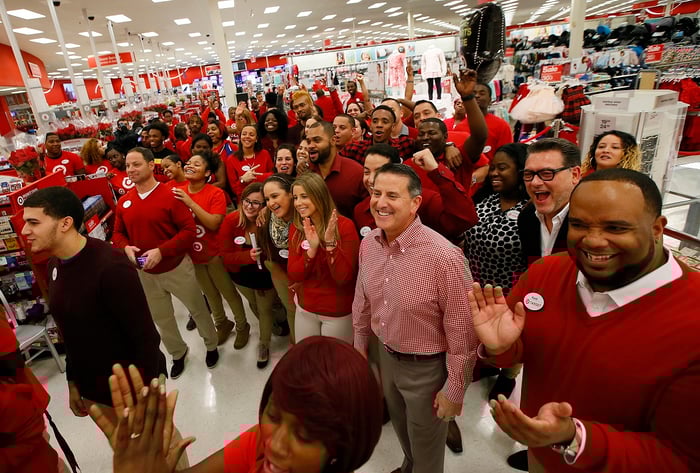
A number of other institutional investors have also bought and sold shares of AKRX. BlackRock Inc. increased its position in Akorn by 43.7% during the fourth quarter. BlackRock Inc. now owns 15,707,461 shares of the company’s stock worth $53,248,000 after buying an additional 4,776,900 shares during the last quarter. Assenagon Asset Management S.A. acquired a new position in Akorn during the fourth quarter worth $3,522,000. Marshall Wace LLP grew its position in shares of Akorn by 44.9% in the third quarter. Marshall Wace LLP now owns 2,998,492 shares of the company’s stock valued at $38,920,000 after purchasing an additional 929,107 shares during the last quarter. Renaissance Technologies LLC grew its position in shares of Akorn by 59.2% in the third quarter. Renaissance Technologies LLC now owns 1,486,900 shares of the company’s stock valued at $19,300,000 after purchasing an additional 553,100 shares during the last quarter. Finally, BlueMountain Capital Management LLC grew its position in shares of Akorn by 46.2% in the third quarter. BlueMountain Capital Management LLC now owns 1,502,480 shares of the company’s stock valued at $19,502,000 after purchasing an additional 474,546 shares during the last quarter. 71.73% of the stock is currently owned by hedge funds and other institutional investors.

Get Akorn alerts:

Several equities research analysts have recently issued reports on AKRX shares. BidaskClub downgraded Akorn from a “strong-buy” rating to a “buy” rating in a research report on Friday, December 7th. Zacks Investment Research downgraded Akorn from a “hold” rating to a “sell” rating in a research report on Tuesday, November 27th. Craig Hallum set a $11.00 price target on Akorn and gave the company a “buy” rating in a research report on Sunday, December 9th. Piper Jaffray Companies set a $9.00 target price on shares of Akorn and gave the company a “buy” rating in a research note on Tuesday, November 27th. Finally, Royal Bank of Canada set a $4.00 target price on shares of Akorn and gave the company a “hold” rating in a research note on Friday, March 1st. Four investment analysts have rated the stock with a hold rating and four have issued a buy rating to the stock. The stock currently has an average rating of “Buy” and a consensus target price of $9.00.

Shares of AKRX opened at $3.65 on Friday. The company has a debt-to-equity ratio of 1.26, a current ratio of 3.47 and a quick ratio of 2.46. Akorn, Inc. has a 12 month low of $3.14 and a 12 month high of $19.81.

Akorn (NASDAQ:AKRX) last announced its quarterly earnings results on Thursday, February 28th. The company reported ($0.29) EPS for the quarter, missing analysts’ consensus estimates of ($0.01) by ($0.28). The business had revenue of $153.39 million for the quarter, compared to the consensus estimate of $164.75 million. Akorn had a negative return on equity of 14.97% and a negative net margin of 34.69%. The firm’s revenue for the quarter was down 17.6% on a year-over-year basis. During the same quarter in the prior year, the business earned $0.14 EPS. Equities analysts forecast that Akorn, Inc. will post -0.47 EPS for the current year.

In other Akorn news, EVP Joseph Bonaccorsi purchased 25,000 shares of the business’s stock in a transaction on Friday, December 14th. The stock was purchased at an average price of $4.48 per share, for a total transaction of $112,000.00. The purchase was disclosed in a document filed with the Securities & Exchange Commission, which can be accessed through the SEC website. 3.50% of the stock is owned by company insiders.

COPYRIGHT VIOLATION WARNING: “Alambic Investment Management L.P. Has $362,000 Holdings in Akorn, Inc. (AKRX)” was reported by Ticker Report and is the property of of Ticker Report. If you are reading this news story on another domain, it was illegally copied and republished in violation of United States and international trademark & copyright law. The correct version of this news story can be read at https://www.tickerreport.com/banking-finance/4205305/alambic-investment-management-l-p-has-362000-holdings-in-akorn-inc-akrx.html.

About Akorn

Akorn, Inc, a specialty generic pharmaceutical company, develops, manufactures, and markets generic and branded prescription pharmaceuticals, over-the-counter (OTC) consumer health products, and animal health pharmaceuticals in the United States and internationally. The company operates in two segments, Prescription Pharmaceuticals and Consumer Health.

See Also: What is a Lock-Up Period?

Want to see what other hedge funds are holding AKRX? Visit HoldingsChannel.com to get the latest 13F filings and insider trades for Akorn, Inc. (NASDAQ:AKRX).

Institutional Ownership by Quarter for Akorn (NASDAQ:AKRX)

Thursday, March 7, 2019

Stock Market News: Target Hits the Mark; Salesforce Sinks

Stocks were little changed in early trading on Tuesday morning, as market participants seemed content to wait for more guidance on key issues like trade and global macroeconomic prospects. As of 11:45 a.m. EST, the Dow Jones Industrial Average (DJINDICES:^DJI) was up 40 points to 25,860. The S&P 500 (SNPINDEX:^GSPC) picked up 3 points to 2,795, and the Nasdaq Composite (NASDAQINDEX:^IXIC) edged higher by 3 points to 7,581.

Earnings season has largely come to a close, but there are still a few high-profile companies that are only now revealing how they did to finish 2018. For Target (NYSE:TGT), news from the often challenging retail world was better than many had expected. But in the software-as-a-service niche of the technology industry, salesforce.com (NYSE:CRM) didn't quite deliver what investors had wanted to see.

Hitting the Target

Shares of Target climbed 4% after the department store retailer reported its fourth-quarter financial results. The company said that it had the strongest growth in full-year comparable sales in more than 10 years, with comps in the fourth quarter climbing 5.3%. Traffic levels surged during the holiday season, and adjusted earnings climbed double-digit percentages from the year-earlier period to reach record levels as Target declared the key period a successful end to an outstanding year.

Dozens of workers at a Target store wearing uniforms.

Image source: Target.

Yet CEO Brian Cornell sees even better times ahead. "We have been driving an ambitious agenda to transform our company, evolve with our guests, and drive strong growth," Cornell said, and "on every count we've been successful." The CEO believes that 2019 will see Target using its momentum to keep innovating and giving customers the shopping experience they want.

Unfortunately, what's less clear is whether Target can sustain its recent rate of growth. The retailer issued guidance calling for low- to mid-single-digit percentage gains in comparable sales for both the first quarter and the full 2019 year, and adjusted full-year 2019 earnings of $5.75 to $6.05 per share would represent just 7% to 12% growth from 2018's final figures. That's slower than the 15% bottom-line gains Target saw in 2018, but at least for now, shareholders don't seem overly concerned with the long-term implications of a slowdown.

Salesforce investors shrug off strong growth

Moving the other way were shares of Salesforce.com, which were down between 1% and 2%. The software company's fourth-quarter results included signs of solid growth, but investors didn't seem as comfortable with its outlook for the coming year.

Fiscal 2019 was a good year for Salesforce, with a 26% rise in revenue during the fourth quarter and for the full year. Adjusted net income soared 88% in fiscal 2019 compared to the previous year's numbers. Co-CEO Marc Benioff lauded Salesforce's performance, asserting "another year of outstanding revenue growth [and] surpassing $13 billion in revenue faster than any other enterprise software company in history."

The big question for Salesforce is what comes next. Co-CEO Keith Block set high expectations for the long-term future, seeking to double sales by fiscal 2023. Yet despite calls for fiscal 2020 revenue growth exceeding 20%, adjusted earnings are likely to remain flat from the most recent year's results. That might be causing investors to rethink their enthusiasm about the stock -- even though the long-term prospects for the industry as a whole remain encouraging.